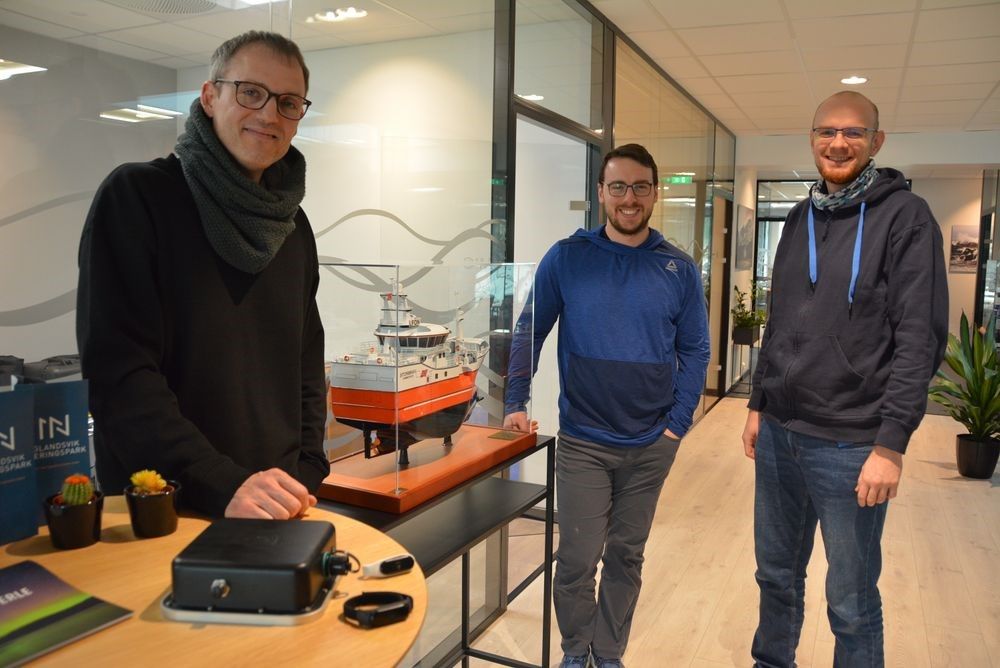
Dimeq is about to enter the commercialisation phase of its technology to make life at sea safer. From left: Ronny Bakke, Connor Smith and Slawomir Rudawski. On the table in front of Ronny is, among other things, the bracelet with the advanced sensors that are an essential part of the solution the company has developed. PHOTO: GJERT MYRESTRAND
Ronny and his colleagues are ready with the technology they believe will save lives at sea
Together with his colleagues, entrepreneur Ronny Bakke is working to ensure that the safety technology of the company he and his father started in 2016 is adopted by large and small shipping companies at home and abroad.
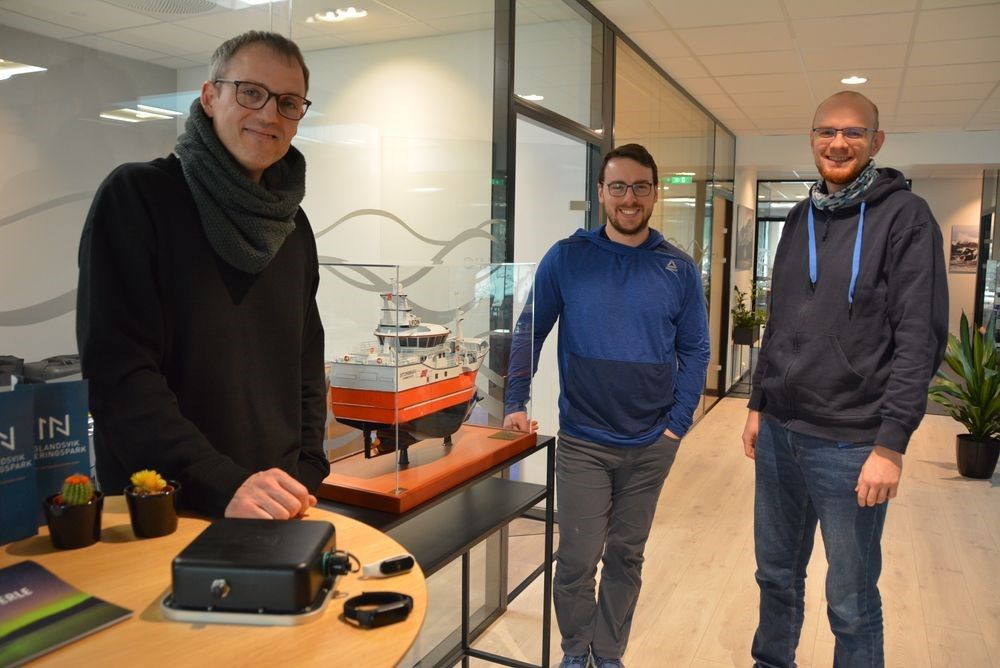
Dimeq is about to enter the commercialisation phase of its technology to make life at sea safer. From left: Ronny Bakke, Connor Smith and Slawomir Rudawski. On the table in front of Ronny is, among other things, the bracelet with the advanced sensors that are an essential part of the solution the company has developed. PHOTO: GJERT MYRESTRAND
“We aim to start selling our solutions this year as soon as we get the necessary certifications,” says founder and CEO Ronny Bakke of the technology company Dimeq AS in Bremanger to Fjordenes Tidende. The company was founded to increase the safety of crews on boats and offshore installations. “I have worked as a chief at sea and experienced two men falling overboard. One of them was a colleague. It took far too long to find them in the sea, and that shocked me,” says Bakke. With a father who also chose the sea as his workplace and made a career as a captain on cruise ships, cargo ships and offshore vessels internationally, safety at sea has been a recurring theme in discussions between father and son for many years. After Ronny himself became a father, he decided to go ashore, and together with his father Audun Viktor Bakke, he started the company Dimeq AS in 2015. “The company name is an abbreviation of Digital Maritime Equipment and refers to the fact that we will supply digital safety equipment to fishing boats and the offshore industry,” says Ronny Bakke.
It’s about knowing where people are when the alarm goes off
The company is now in the initial stages of commercialising the technology they have developed, which primarily involves using several advanced sensors, placed in a small bracelet or attached to a clip, to find people who have fallen overboard, or to know where the crew on board a boat or offshore installation are if an emergency situation should arise. If a person falls over the rail, no one knows about it. And if there is a fire on board, no one knows where people are. Not least, it is crucial to know that there are no people in the engine room when you have to fill it with carbon dioxide to extinguish a fire. Both my father and I have experienced several fires at sea. The procedures we have today do not cover these situations at all. It takes an average of 90 seconds before a fire in an engine room is out of control. If you start extinguishing with Co₂ before you are sure the engine room is clear of people, lives can be lost quickly.
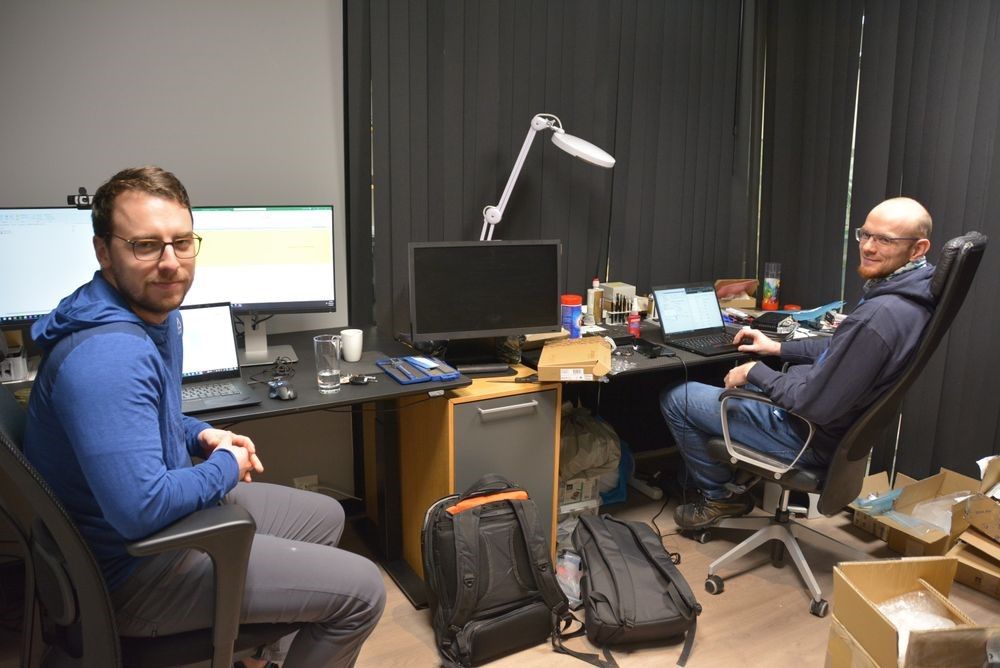
Dimeq Chief Product Officer Connor Smith, left, is from Texas, USA. He has settled in Bremanger. Solution Architect Slawomir Rudawski, on the right, is from Poland. They are also joined in product development by a Polish colleague Jacek Lach with a PhD in computer technology. PHOTO: GJERT MYRESTRAND
Vision zero for fatalities at sea
Safety at sea is a priority area for the authorities, and last year the Norwegian Parliament launched what is known as the zero vision for fatal accidents at sea. This vision will apply to the entire aquaculture and fishing industry, and it is particularly important to increase the safety of small vessels, for which we have developed a specially adapted solution. There is no mobile network at sea, and steel often effectively stops radio and other wireless signals, but Dimeq’s technology also makes it possible, for example, for people on the bridge of a boat to use the vibration of a bracelet to send a message that one or more people are wanted on the bridge. What about the new and strict data protection rules laid down in the international GDPR regulations? Won’t this be a form of surveillance of where people are at any given time? No, we have placed limits on access and use of personal data. Firstly, the captain of a ship has the right to know where all crew members are in an emergency situation. Secondly, no data on the whereabouts of a person will be displayed until an alarm is raised. Thirdly, the system is password protected. In the development work for the solution, which is adapted to boats, Dimeq has worked closely with everyone from the Norwegian Seafood Research Funding Agency (FHF) to SINTEF and the Norwegian Society for Sea Rescue. A reference group consisting of Telenor, the Norwegian Coastal Administration, the Directorate of Fisheries, the Norwegian Maritime Directorate and Bud and Hustad has also been established. In cooperation with the shipping company Vestfart AS, Dimeq AS is currently conducting several tests of its solutions. In late summer, a large-scale pilot project is planned with the seismic company PGS, in which several ships in the Titan class will participate. “The technology is there and the timing in the market is right. Our products and solutions are ready, and I think it’s great that we have already begun to receive very specific preliminary inquiries from several shipowner teams regarding both functionality and price. Our focus now is to get the CE certification of the system in place and to raise NOK 6 million to commercialise the solution,” says Ronny Bakke.
International background
Those who do not know Ronny Bakke’s background will find it easy to believe that he has grown up and lived in Norway all his life. His dialect is probably more Bergenian than Brangerian, but the fact that he grew up in Spain and Honduras and that his mother tongue is Spanish will probably surprise many. This has to do with the fact that Ronny’s mother is from Honduras, and that the family has lived longer in Honduras and Spain than in Norway.
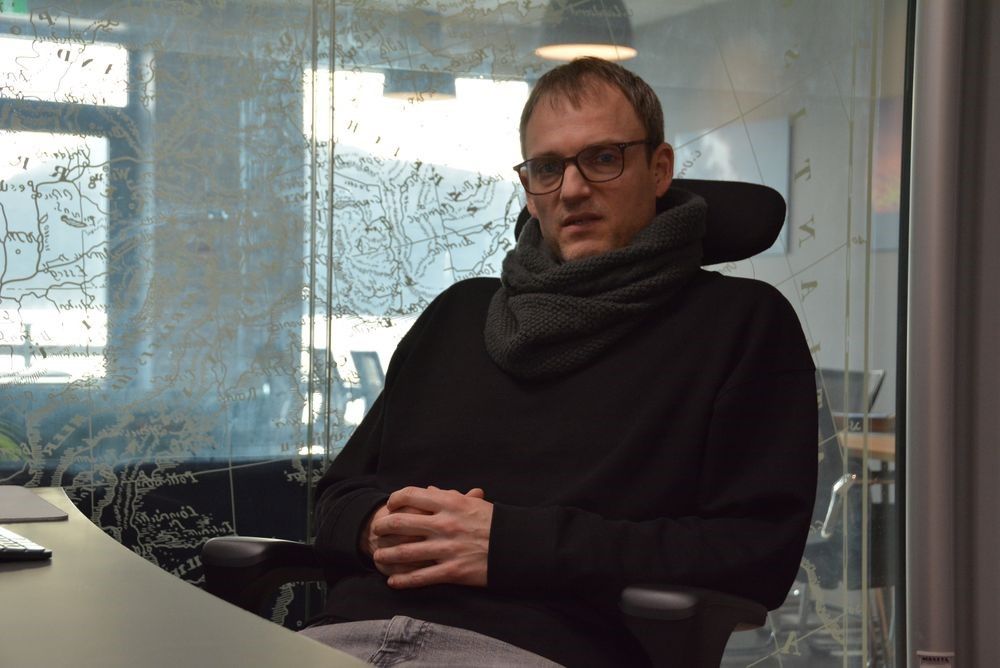
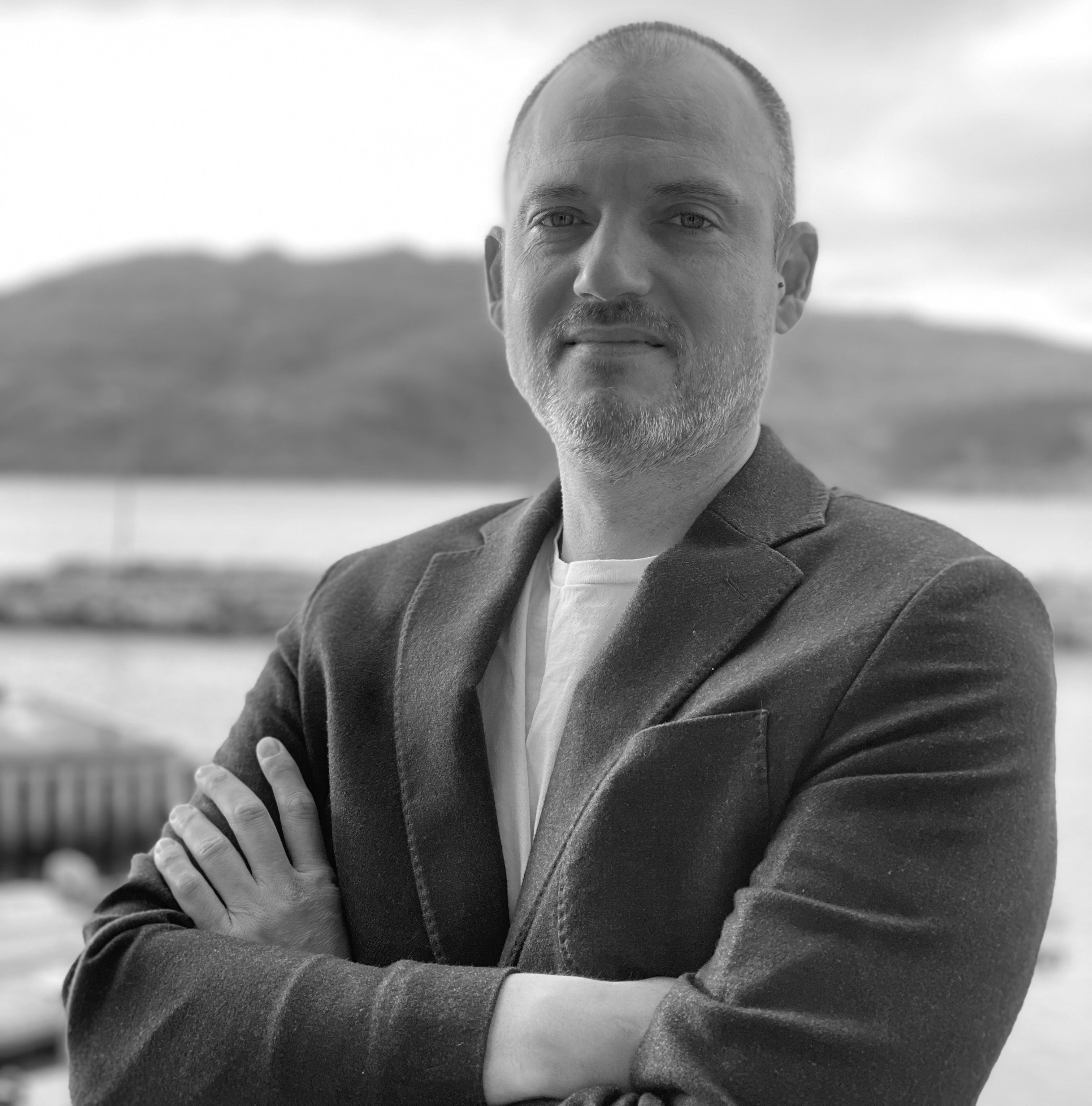
Ronny Bakke grew up in Bergen, Honduras and Spain. Now he has settled down on the family property at Novelandet in Bremanger, where his father, Audun Viktor Bakke, grew up. PHOTO: GJERT MYRESTRAND
“I was born in Bergen and lived there until I finished second grade. Then the family went to Honduras in Central America. We lived there for a few years before we ended up in Spain. I lived there and had my social life until 2006,” says Bakke, who trained as an industrial engineer in Spain. “Times were tough in Spain in 2005, so I decided to go to Norway and Bremanger. My father’s family is from here, and we had visited the family farm at Novelandet in Bremanger many times. Bakke chose to become Chief Mechanic Seismic on one of the boats of one of the world’s largest seismic companies, CGG. After 12 years at sea, and after becoming a father for the first time, he chose to go ashore in 2015 to pursue, together with his father Audun Viktor Bakke, the dream of developing safety technology for the industry they had both been part of for many years. “I have always been passionate about technology and the opportunities we have gradually gained to solve the safety challenges that have ‘always’ been part of maritime activities. I am convinced that many lives could be saved if we make use of the opportunities that now exist.
Translated from Norwegian version of this article published in fjt.no
 ronny.bakke@dimeq.no
 +47 9740 1471