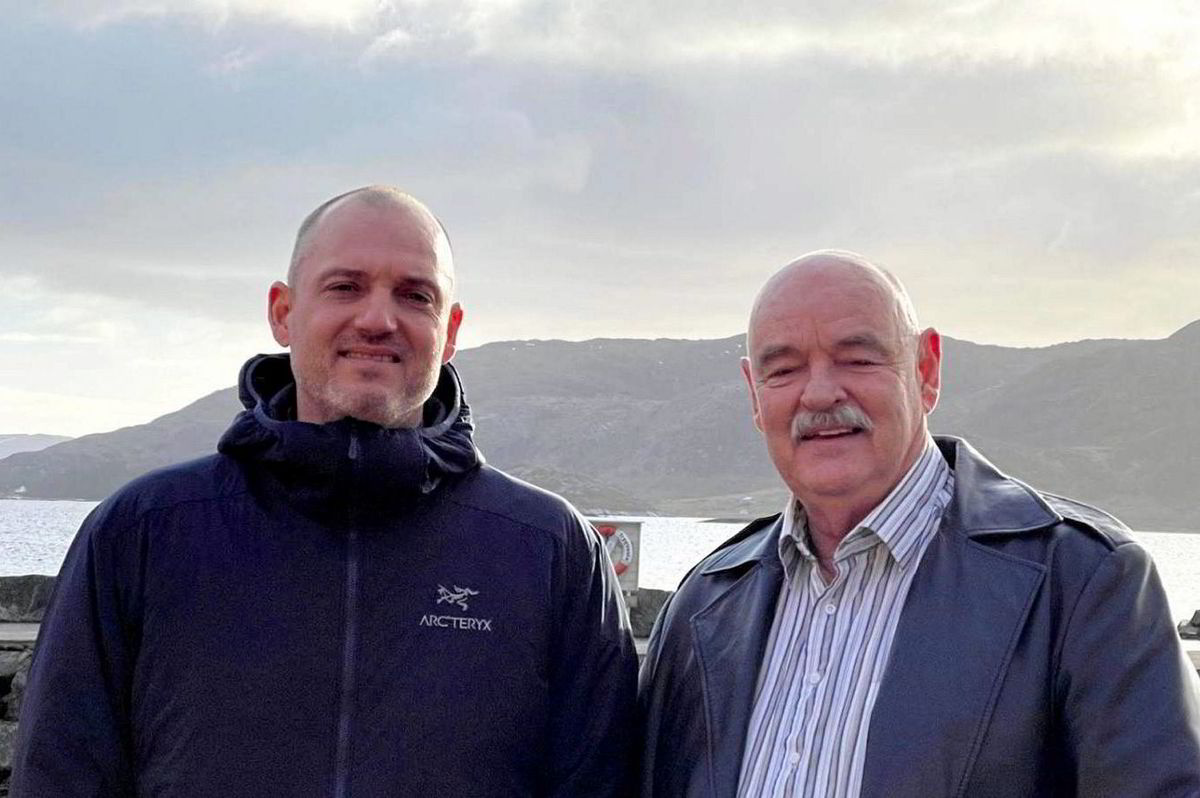
Ronny Bakke & Audun Bakke
Over a glass of red wine, the father and son hatched the idea that could revolutionize marine safety.
With Kongsberg Innovation as a shareholder, the founders aim to conquer both the Norwegian and international markets.
“We have all the patents and everything in place, and we believe the breakthrough could be just around the corner,” says Ronny Bakke, CEO of Dimeq in Bremanger.
Overview in emergency situations
Dimeq has developed a fully automated safety system for personnel on ships or offshore industrial installations. The system is an electronic communication consisting of boxes connected to wristbands worn by individual employees.
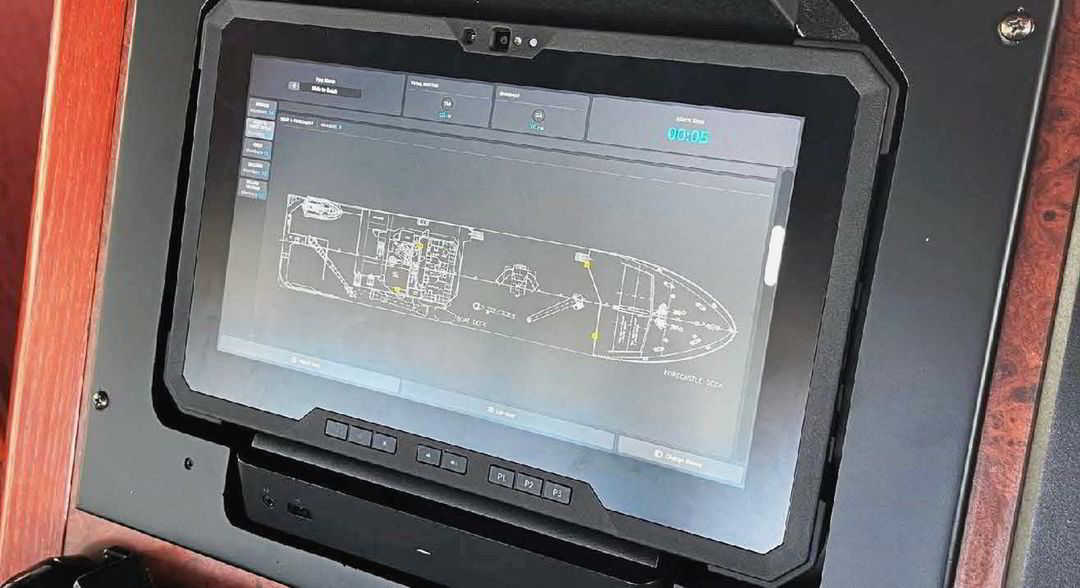 The screen provides an overview of the location of each individual. Photo: Dimeq
In man-overboard situations on boats, fires, or emergency situations on rigs and other offshore installations, management will have updated information at all times on the location of each employee.
The latest development of the product is aimed at the coastal fishing fleet. Dimeq is developing a system that automatically stops the machine and alerts the coast radio in the event of a man-overboard situation on a one-man shark. A rescue operation will then be launched immediately.
“We aim to launch this commercially in the first quarter of 2024, with partners such as SINTEF and the Norwegian Society for Sea Rescue. The Research Council of Norway has supported the project with NOK 4 million,” says Bakke.
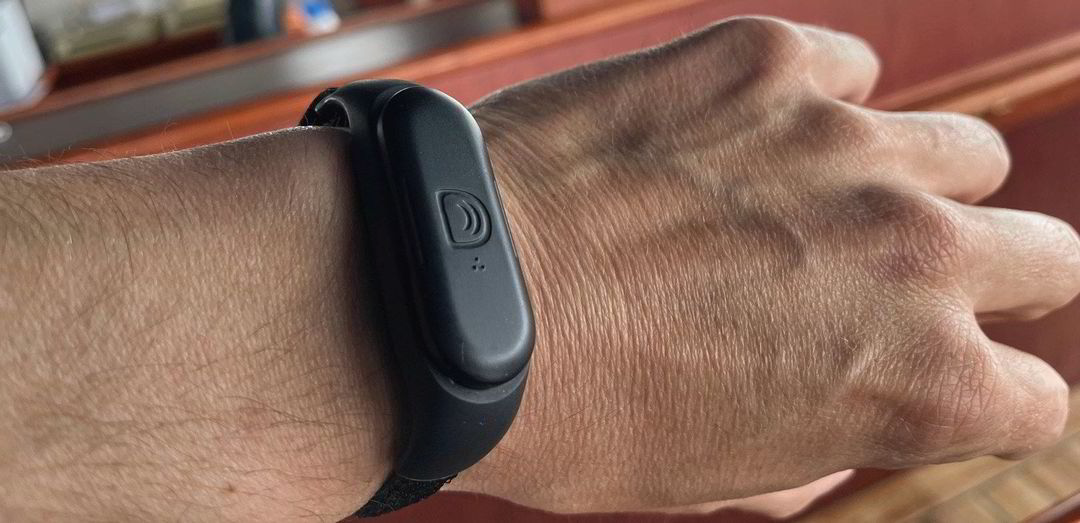 The wristband that the employee is to wear. Photo: Dimeq
Many years of experience.
He has a background in the offshore industry and industrial engineering. His father, Audun, worked as a cruise ship and offshore vessel captain for many years. During their careers, they have experienced accidents with man-overboard and fires with subsequent evacuations. One summer evening in 2015, they were sitting with a glass of wine each, “solving world problems,” as Bakke puts it, with a slight chuckle.
The conversation turned to safety and their experiences.
“The conclusion was that it must be possible to develop something that improves safety for those working offshore,” says Bakke.
Started from scratch.
They began doing research and quickly found that the necessary technology existed. Still, it was not assembled in a solution that took into account the considerations that the Bakke father and son believed were necessary.
“We started completely alone. The first step was to check if there were funds and support available from public support schemes,” says Bakke.
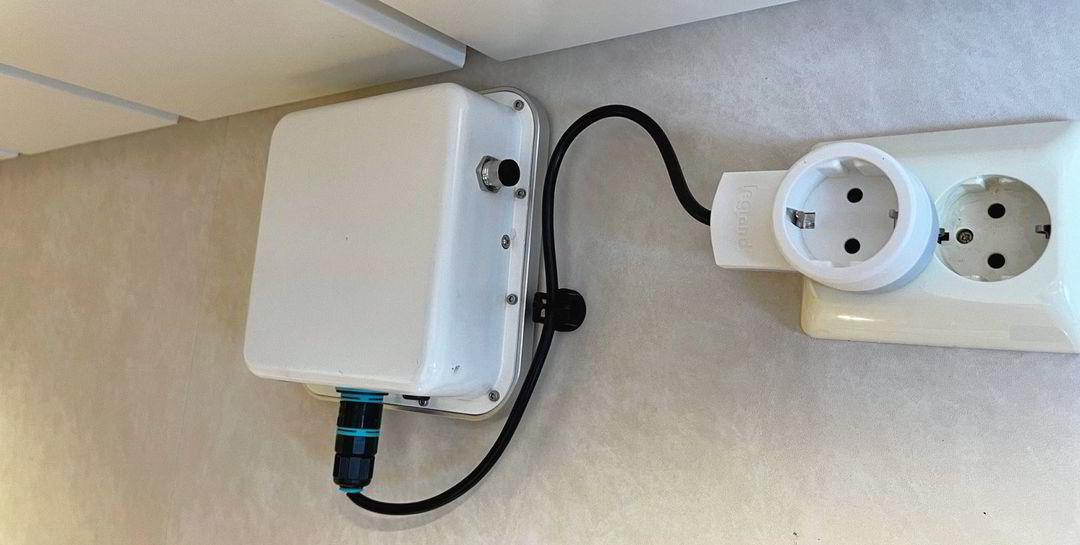 The wristbands communicate with boxes in various locations on the ship or installation. Photo: Dimeq
“Innovation Norway has been an invaluable partner in the project. We have received support for both development and commercialization. At the same time, we received both help and a critical review of the patents,” says Bakke.
Steel Challenge
One of the biggest challenges that Dimeq had to solve was the communication between the sensors and the employees’ wristbands on ships or offshore installations where steel structures make it challenging to control radio signals.
“We use, among other things, the electrical network on the boats for data transmission. In total, we have five different communication channels incorporated into the solution, in addition to a separate battery that kicks in in the event of a blackout or loss of power supply,” explains Bakke.
Increased demand
When Kongsberg Innovation became a shareholder in 2019, it was a turning point for Dimeq.
“This was a milestone. They have been a door opener for us and have contributed a lot both in financing and marketing,” says Bakke.
The first boats have already started using the solution. The high optimism about the future is that demand has increased significantly.
“Now both shipowners and larger distributors are coming directly to us and saying they are interested in the solution. We have never experienced this before. In the past few weeks, we have landed two specific agreements, and more are in the pipeline,” says Bakke.
Read in Norwegian.
 ronny.bakke@dimeq.no
 +47 9740 1471